Yoga or a Core Circuit? How to Read a Workout Poster
Yoga and a timed core circuit can both appear in fitness imagery, but the labels describe different experiences. The supplied pink workout poster includes high knees, mountain climbers, crunches and plank variations. It is useful as a reference for recognising a circuit, not as a yoga lesson or proof of a body-shaping result.
Supplied visual reference. Images may be illustrative or AI-generated and do not demonstrate verified technique.
Start with what the session asks you to do
A yoga class may combine postures, transitions, breathing and attention, with the emphasis depending on the style and teacher. A timed circuit organises a series of exercises into work and rest intervals. The poster lists twelve movements with forty-five seconds beside each. Some are dynamic and others are held positions. Neither the colour scheme nor a mat makes the circuit yoga. Read the actual movement list and instructions before deciding whether a session matches what you are looking for.
Read past the headline
A phrase such as “slim waist” is a marketing headline, not evidence of a personal result. An illustration cannot establish calorie expenditure, body composition changes or whether an exercise is suitable for you. No before-and-after promise is adopted on this site. If your aim is learning yoga, look for a class that teaches yoga fundamentals. If you want a fitness circuit, choose a credible programme with preparation, modifications and appropriate guidance rather than relying on a single poster.
Check whether the timing adds up
Twelve intervals of forty-five seconds total nine minutes of work. Two full rounds would be eighteen minutes of work, before rests or transitions. The poster also mentions a fifteen-minute workout and repeating two to three rounds, so those instructions do not describe one consistent total duration. This is a reason to pause and seek a complete programme, not to rush the movements to fit the headline. A usable class should make its timing, breaks and progression understandable.
Look for the parts a poster leaves out
A static graphic cannot show a full transition, observe your technique or respond when something hurts. It may omit how to prepare, how to simplify an exercise and how to finish. Planks and fast transitions can place demands on wrists, shoulders and other areas. Do not assume the easiest-looking illustration is the right option. Use an appropriate instructor-led resource if you are learning, and ask for individual advice when an injury or health concern affects activity.
Choose a session for a clear reason
Decide whether you want an introductory yoga lesson, general movement or a fitness class, then select a suitable resource for that purpose. You do not need to combine everything into one routine. A well-explained beginner class can be more useful than a long list of unfamiliar exercises. Keep the poster as a visual reference if you like its layout, while treating the actual practice as something that needs complete, credible instruction. The best next step is clarity about the session, not a more dramatic headline.
Your quick checklist
- Read the exercise list, not just the headline.
- Check work, rest and total duration separately.
- Choose complete instruction with suitable alternatives.
Common questions
Is this poster a yoga sequence?
No. It describes a timed fitness circuit containing several exercise types, rather than a yoga lesson.
Does the site recommend completing the pictured circuit?
No. The original poster is shown for discussion. This page does not prescribe its exercises, timing or repetitions.
Why include it on a yoga website?
It helps readers distinguish yoga content from adjacent fitness imagery and evaluate the information behind a workout headline.
View the complete supplied reference image
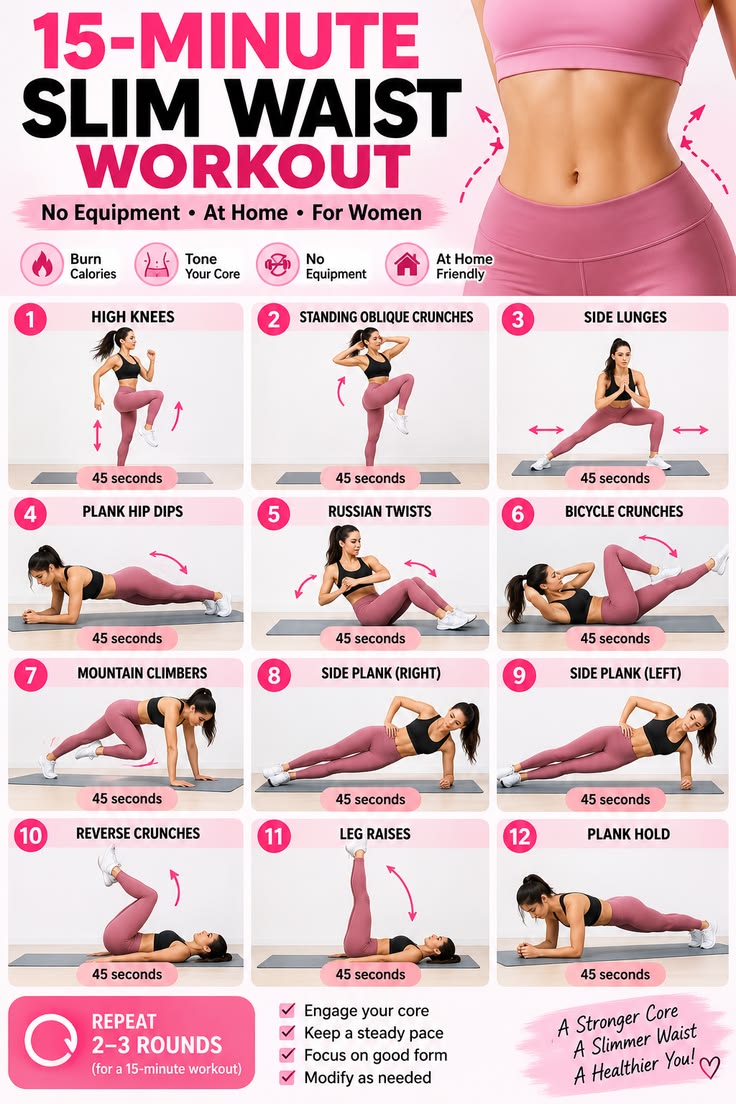
Original artwork supplied for this website. Captions and promotional claims inside the image are not clinical recommendations or a personalised programme.