Asana, Sequence and Practice: Three Different Things to Put in Your Yoga Notes
A photograph can show one posture, a written list can describe an order, and a class can contain much more than either. Keeping those three levels separate makes a yoga notebook easier to read. You can identify the thing you do not understand without assuming that recognizing a shape means you know how to enter, leave or adapt it. This guide explains a way to organize learning notes; it does not supply a sequence to perform or replace instruction from a qualified teacher.
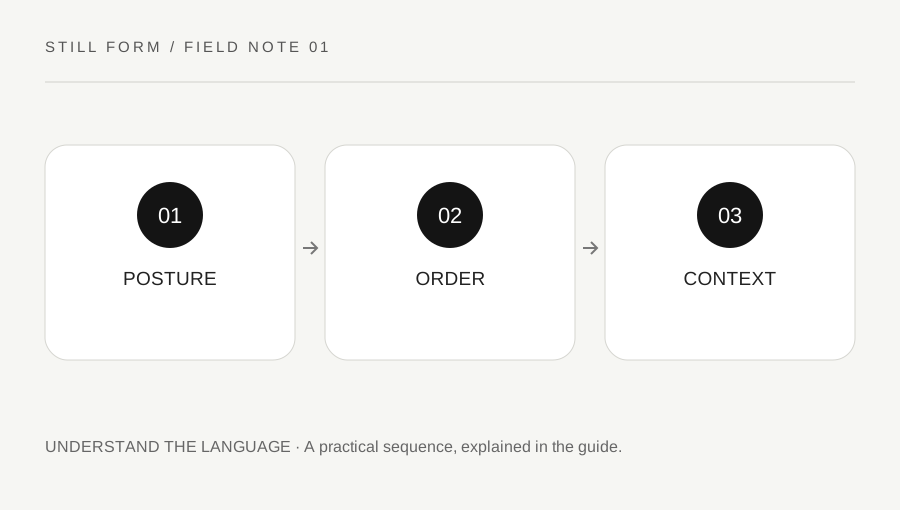
Original explanatory diagram. Examples illustrate a method or decision; they are not claims of personal testing.
Use posture as an identification label
Asana is commonly used for a yoga posture. NCCIH describes physical postures as one element of yoga as commonly practiced in the United States, alongside breathing techniques and meditation. A posture name is therefore a useful index entry, rather than a complete account of yoga or a guarantee that every teacher uses precisely the same variation.
In a notebook, give a posture its own small record: the name used by the teacher, the date, any alternate name encountered and the question you want to ask. A name copied correctly can still refer to an instruction you have not learned. Leave that distinction visible instead of filling the gap with a guess from a photograph.
Give a sequence its own page
A sequence includes order and the connections between positions. Merely writing three familiar posture names does not record those connections. Add columns for starting position, the transition instruction you actually received, any support specified and the place where the teacher offered a different option. If information is missing, write question rather than inventing a transition.
A sequence also has a purpose and an intended audience. A class demonstration, an individual adaptation and an illustration in an article are different contexts. Do not combine attractive fragments from several sources and label the result a beginner programme just because each fragment has a recognizable name.
Worked example: separate three notebook entries
Imagine a class handout names three postures and says that they appear in a guided standing section. Make a posture index with three names, a sequence entry marked standing section and a practice entry for the whole class. Under sequence, record that the handout does not explain the transitions. Under practice, note whether the class also includes seated instruction, breathing or a quiet closing.
This produces three useful records without pretending to reconstruct the lesson. At the next opportunity, ask the teacher to clarify the missing connection. If the handout is only a memory aid for people who attended, acknowledge that limit rather than treating it as a self-contained tutorial.
Record what belongs to the whole practice
The practice entry can describe format, instruction, pace and the options available that day. Keep observations factual: the teacher demonstrated before inviting participation; a chair option was offered; a particular term was not explained. These details can help you choose a suitable future lesson without giving every class the same score based on posture count.
Separate observed information from your own response. Felt rushed is a personal observation; the class contained twelve named postures is a count. Neither establishes a medical benefit, a qualification or suitability for another person. Dates are helpful because a later class with the same title may have a different plan.
Use the notes to ask a narrower question
A clear question might be: I recognize the posture name, but I did not understand how the class moved into it; can you explain an appropriate option for me? That is more useful than asking whether you did yoga correctly based on one picture. Ask about relevant health or access needs before participating, using appropriate professional guidance where needed.
Review the notebook by improving the clarity of a record, not by accumulating increasingly demanding shapes. A completed page can simply mean that you now know what the term refers to, what instruction remains missing and whom to ask. Understanding the limits of a note is part of making it usable.
A practical checklist
Choices are saved in this browser. Reset them here or clear this site’s browser storage.
Questions that come up
Does knowing the Sanskrit name mean I know the posture?
No. A name helps identify the subject, but it does not provide individualized setup, transitions or appropriate alternatives.
Can I build a class by joining posture photographs?
Pictures can support a discussion, but they do not establish a suitable sequence. Seek instruction appropriate to your experience and needs.
Should a yoga notebook contain only physical postures?
It can also record terminology, class format, breathing or meditation instruction, questions and access arrangements. Choose categories that describe what was actually taught.
References & scope
Background references checked on 18 October 2026. Worked examples and diagrams are original teaching material.