When a Yoga Breathing Cue Feels Like a Target: Questions to Ask Before Forcing It
Instructions about breathing can sound simple until you try to match a teacher’s pace while also listening, moving and watching a screen. A request to breathe deeply can be misread as a demand to take the largest possible breath. A count can become a score. This guide helps distinguish ordinary cue interpretation from a specific breathing technique and shows how to ask for clearer instruction. It does not prescribe breath retention, forceful breathing or a treatment for a health condition.
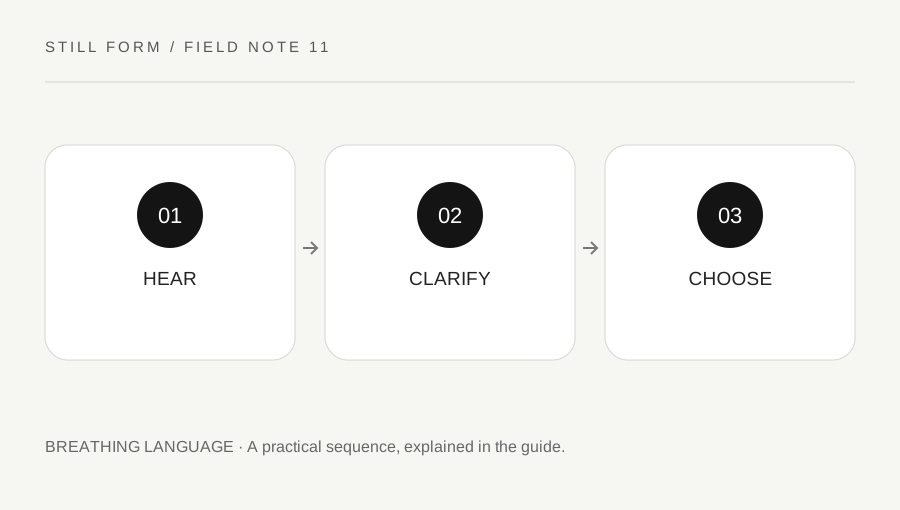
Original explanatory diagram. Examples illustrate a method or decision; they are not claims of personal testing.
Identify what the instruction actually asks
Write down the cue as accurately as you can without expanding it. Notice your breathing is different from match this count, and both differ from a named technique with a detailed method. Do not add a pause or breath hold merely because there is a pause in the teacher’s speech. Silence in a recording can be time for explanation, not an instruction to stop breathing.
Ask whether the count is optional, whether ordinary comfortable breathing is an available alternative and how the technique is introduced to someone new. These are questions about instruction. They do not require you to demonstrate that you can tolerate an unfamiliar pattern before you are allowed to ask.
Keep comfort separate from performance
NHS guidance on a breathing exercise describes breathing comfortably without forcing it. That is a useful distinction when a general cue becomes a personal challenge. Larger, longer or louder does not automatically mean a better interpretation. You do not need to compete with the recorded pace or another participant.
If the instruction feels uncomfortable or causes symptoms, stop the technique and seek appropriate guidance rather than pushing through to finish a count. Relevant health conditions deserve individual advice. The class teacher can explain their teaching method, while a suitable healthcare professional addresses medical questions. Neither a website nor a successful attempt by a friend can resolve that individual assessment.
Worked example: turn a vague cue into a question
Imagine the teacher says lengthen the exhalation while the recording displays a moving graphic. You notice that keeping up makes you strain. The useful notebook entry is not failed at breathing. It is graphic pace uncomfortable; ask whether the graphic is optional and what an appropriate alternative is. That records the actual problem without assigning a diagnosis or a performance grade.
Before repeating the lesson, ask the teacher to explain the intended method, audience and stopping options. If the answer remains a demand to match an uncomfortable pace, choose a different source of instruction. A breathing cue should be understood in context rather than treated as a universal target.
Separate observation from a specialized technique
Ordinary awareness of breathing does not supply the instructions for every practice described as breathwork or pranayama. Names can encompass different methods, experience expectations and precautions. NCCIH advises newcomers to avoid forceful breathing practices. Do not infer that a dramatic demonstration belongs in a beginner lesson because it appears next to a gentle posture.
When researching a named practice, look for a qualified instructor who explains what is being taught and who it is intended for. Be cautious about tutorials that offer only a dramatic result or a competitive count. A method’s traditional name, popularity or production quality is not an individualized safety assessment or evidence of a promised health outcome.
Build a useful instruction note
Use four short fields: exact cue, context, what was unclear and question for the instructor. Context could include whether you were seated, listening or moving, without turning the note into a self-designed technique. Avoid recording a maximum breath count as though it were a goal for the next lesson.
After clarification, update the note with the actual explanation and any appropriate alternative provided. Keep that answer attached to the specific method, not every yoga class. If your objective is simply to understand a lesson, a clear explanation may be all you need. Progress can mean choosing a comprehensible instruction and declining an unsuitable technique rather than increasing duration or intensity.
A practical checklist
Choices are saved in this browser. Reset them here or clear this site’s browser storage.
Questions that come up
Does deep mean the largest breath I can take?
Do not assume that. Ask what the teacher intends, and avoid forcing breathing to satisfy a vague word or visual target.
Should I add a breath hold to make a pattern symmetrical?
No. Do not invent retention or other technique details. A general cue does not authorize an unfamiliar breathing method.
Is a longer count proof that I am improving?
A count alone does not establish an appropriate technique or a health benefit. Keep learning goals tied to clear, suitable instruction rather than a maximum.
References & scope
Background references checked on 18 October 2026. Worked examples and diagrams are original teaching material.