Breath Counts and Seconds in Yoga Notes: Record the Unit Without Forcing the Pace
A note saying three breaths is not the same measurement as a note saying fifteen seconds. Breathing pace varies, and a teacher may use a count as a cue rather than a stopwatch instruction. Converting between them casually can turn a memory aid into a duration that was never prescribed. This guide explains clear notation and simple arithmetic for records. It does not recommend how long to hold a posture or prescribe a breathing rate.
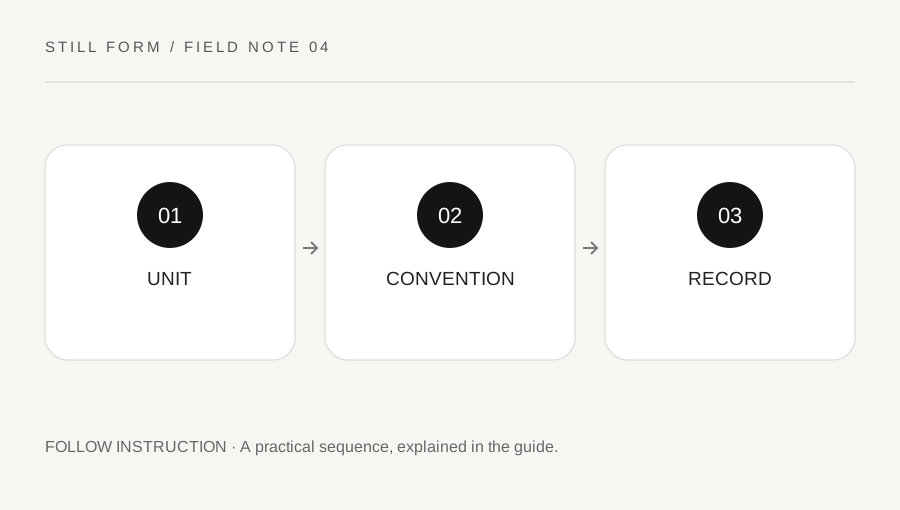
Original explanatory diagram. Examples illustrate a method or decision; they are not claims of personal testing.
Write the unit beside every count
The bare number three could mean three repetitions, three breath cycles or a three-second interval. Put the unit in the note at the moment you record it. If the lesson uses breath cycles, clarify whether a cycle means one inhalation and one exhalation in that context. Do not silently assume that every count uses the same convention.
Keep the instruction and the observation in different columns. Teacher cue: three comfortable breaths is an instruction record. My observed elapsed time: not measured is an honest observation. Replacing the missing time with an estimate makes the record look more precise without adding actual information.
Do not turn timing arithmetic into a breathing goal
If a hypothetical three-cycle observation lasts eighteen seconds, the arithmetic average is six seconds per cycle. That describes that observation. It does not mean the next attempt should use six-second cycles, that each cycle was exactly equal or that another person should match it. Averages hide variation within the interval.
NHS breathing guidance emphasizes comfort without forcing. Use that principle when interpreting a count, rather than stretching or shortening a breath to satisfy a notebook. If a cue is uncomfortable or confusing, ask the instructor about an appropriate alternative. A recorded duration does not override your individual guidance or justify continuing a position that is unsuitable.
Worked example: make two records comparable
Consider two fictional notes. Monday says four breaths, time not measured. Thursday says twenty seconds, breathing not counted. These entries cannot establish that the holds were equal. Label them as different observations. There is no defensible conversion factor in the notes, even though the numbers might look compatible.
A clearer future record could preserve the teacher’s original cue, the position variation actually taught and any timing that was measured without disrupting instruction. Only collect information that has a useful purpose. You do not need a stopwatch to make yoga notes valid, and adding measurement should not create a new challenge or distract from the teacher’s explanation.
Account for pauses, explanation and transitions
A class segment that lasts five minutes can contain demonstration, questions, transitions and several positions. Dividing five minutes by the number of named postures does not reveal the intended hold duration. Write the segment length separately from any individual cue. The same applies to a video chapter: its running time includes whatever appears in the recording.
If you are planning your calendar, use the whole lesson duration plus practical setup time. If you are documenting instruction, keep the actual cue. Confusing those two purposes is a common source of false precision. A twenty-minute appointment is a schedule entry, not a recommendation to spend twenty minutes in a particular shape.
Use notation that leaves room for questions
A compact format is cue, unit, source and question. For example: three cycles; definition of cycle explained in lesson; timestamp recorded; ask about an alternative count. This can be more useful than a detailed spreadsheet of guessed seconds. Keep any change the teacher recommends attached to the relevant lesson rather than applying it everywhere.
If timing causes you to chase a count or hold your breath, put the measurement task aside and clarify the instruction. The aim of a note is to preserve meaning. A shorter, accurate entry that acknowledges uncertainty is easier to use responsibly than a tidy set of numbers that suggests a universal practice rule.
A practical checklist
Choices are saved in this browser. Reset them here or clear this site’s browser storage.
Questions that come up
Can I assume one breath always takes five seconds?
No. Breathing pace varies. A fixed conversion would require information the note may not contain and should not become a forced breathing target.
Does this guide recommend a hold duration?
No. The examples explain units and record keeping. Appropriate posture and timing instruction depends on the person and context.
Should I count if it distracts me?
A notebook is optional. Ask the teacher how to follow the lesson comfortably rather than adding a competing measurement task.
References & scope
Background references checked on 18 October 2026. Worked examples and diagrams are original teaching material.