Read a Yoga Class Description: Ask About Transitions, Stillness and Instruction
A yoga timetable can use familiar style names while leaving the practical experience unclear. Words such as gentle, flow or all levels do not tell you exactly how often the class moves to the floor, whether instructions are demonstrated or what alternatives are available. Reading the description as a list of answerable questions helps you compare actual formats. The goal is to find understandable information before booking, rather than assigning a universal difficulty rank to a yoga tradition.
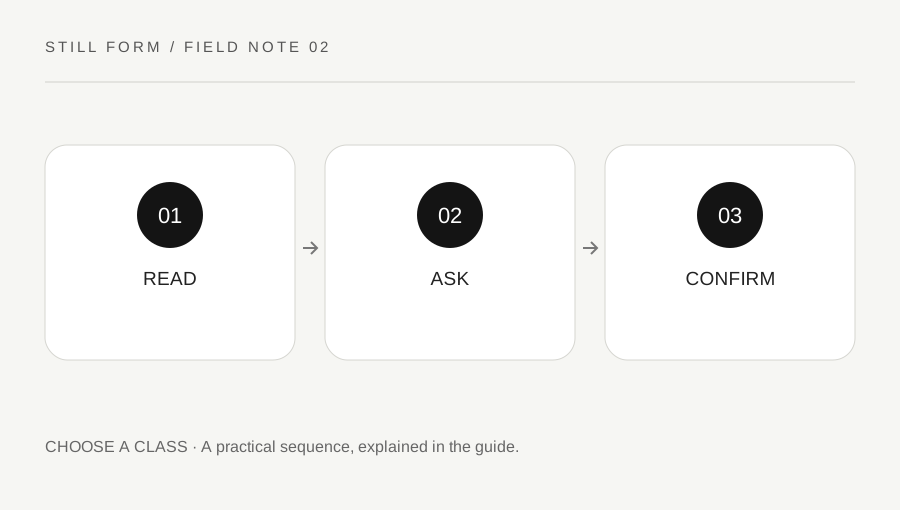
Original explanatory diagram. Examples illustrate a method or decision; they are not claims of personal testing.
Translate broad labels into observable details
Start with the description as written. Underline words that refer to pace, position, environment, instruction or experience. Gentle describes an intention but is not an exact movement list. Flow may suggest linked movements, yet it does not specify which links or how they are taught. NCCIH notes that yoga styles vary considerably, which is a reason to ask about the particular class.
Make questions concrete: Does the lesson include repeated floor-to-standing transitions? Is there time to watch an explanation before joining? Does the teacher explain alternatives within the class? Those answers are more informative than assuming that every class carrying the same label will feel identical.
Ask how stillness is used
Stillness can mean several things: time listening to an explanation, a held position, a seated practice or a quiet closing. Ask which meaning applies and whether position choices are available. A lesson with fewer transitions is not automatically comfortable for everyone; a sustained position can present a different set of questions.
If you need to change position or keep your eyes open, discuss how that is handled. You do not need to turn the conversation into a detailed public account of your health. Ask privately about relevant access arrangements and use a qualified health professional for individual medical advice rather than asking a timetable administrator to assess a condition.
Worked example: compare two descriptions
Suppose Class A is described as slow flow and Class B as supported yoga. Create two columns with the same rows: starting position, transitions, instruction method, available supports, quiet sections and room conditions. Fill only the information supplied. Both columns may initially contain more questions than answers. That is a useful result rather than a failure to choose.
The organizer might explain that A repeats linked standing and floor movements, while B uses floor supports for extended periods. Those are distinct formats, even if both are marketed as unhurried. Your next decision concerns the actual requirements and available options, with appropriate individual guidance, not which title sounds more welcoming.
Check what the teacher can realistically offer
Ask whether the session is a group class, an introductory workshop or individual instruction. A large group may not provide the same opportunity for detailed setup discussion as a small appointment. Clarify whether the teacher can see participants, especially online, and whether the advertised alternatives are taught or only mentioned.
Keep equipment and environment in the comparison: room temperature, usable space, available chairs or supports and any expectation to bring equipment. An offered prop does not guarantee an appropriate adaptation. Ask what the instructor intends it to do. If essential information remains unclear, a different format may be easier to assess than making optimistic assumptions.
Confirm the answer before treating it as a plan
Save the organizer’s response with the date and exact class. A workshop offered once may differ from the weekly class on the same timetable. Ask how to raise a question on arrival and whether the format has changed. Registration terms, teacher qualifications and access details deserve their own checks instead of being inferred from an appealing description.
After attending, compare the actual format with the information received. A useful note might say that transitions were demonstrated but the room was noisier than expected. This helps your next booking decision without declaring the class universally easy, hard or therapeutic. If a relevant need was not addressed, discuss it directly before repeating the session.
A practical checklist
Choices are saved in this browser. Reset them here or clear this site’s browser storage.
Questions that come up
Is all levels a guarantee of suitability?
No. It is a broad description. Ask about the movements, instruction and alternatives relevant to you rather than relying on the label alone.
Is a slow class always less demanding?
Pace is only one feature. Held positions, transitions and individual needs also matter, so ask what the session includes.
Can an organizer tell me whether yoga treats a condition?
A class description cannot provide an individual medical assessment. Discuss health needs with an appropriate professional and clarify the class format separately.
References & scope
Background references checked on 18 October 2026. Worked examples and diagrams are original teaching material.