Hands-On Assists in Yoga: Make the Choice Clear Before the Class
A hands-on assist involves physical contact, so a useful class conversation should explain what is proposed and how you can choose. Attending a lesson, using a prop or accepting an assist previously does not need to become an assumption about future contact. Ask the studio and teacher how their process works before class begins. This guide offers practical communication examples and describes the Yoga Alliance member policy as a source; it is not a statement that every teacher worldwide follows one organization’s rules.
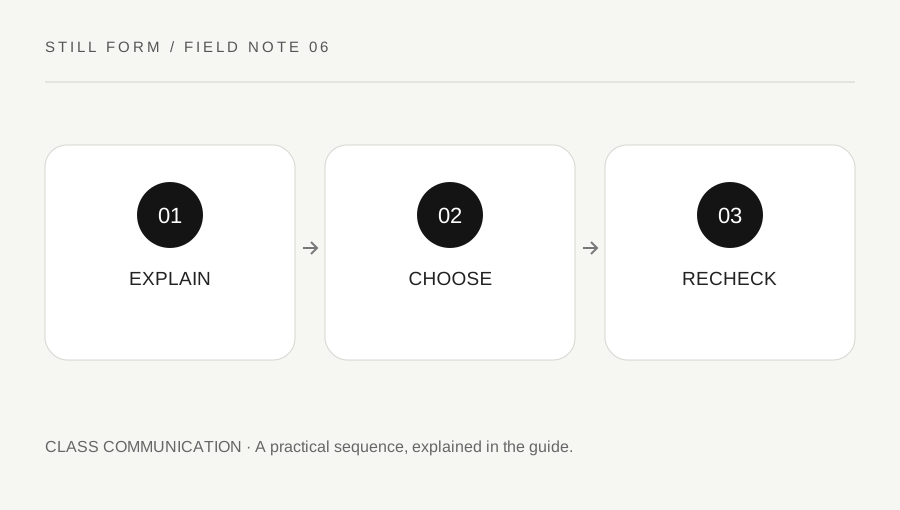
Original explanatory diagram. Examples illustrate a method or decision; they are not claims of personal testing.
Ask what the teacher means by an assist
The word assist can cover different actions, so ask for a plain explanation. Does the teacher offer verbal cues, a demonstration or physical contact? If contact is proposed, what is its purpose and what would happen? You should not have to infer the answer from a general sentence in a booking confirmation.
A useful question is: Can I participate with verbal instruction and no hands-on contact? Ask how that preference will be communicated during the actual session, including if another teacher is present. A clear process is more useful than a vague reassurance. You can ask these questions without providing a personal history or justifying why you prefer a particular boundary.
Know the scope of the published policy
Yoga Alliance’s Code of Conduct applies to its members. Its policy calls for explicit, informed permission before physical adjustments and explains that silence alone is insufficient. It also treats permission as ongoing rather than automatically carrying a previous choice into later contact. Read the current policy directly for its precise scope and language.
Those membership rules are a reference for discussing a class, not proof that a particular teacher belongs to the organization or follows a process. Ask the actual provider about their policy. Avoid assuming that a logo, a friendly greeting or a waiver tells you exactly how physical contact will be handled during a specific lesson.
Worked example: state a clear preference
Suppose you want to attend a group class with no hands-on assists. Before booking, write a short message: I would like verbal instruction without physical adjustments. How can I make that preference clear to the teacher, and can it be maintained throughout the session? This states the choice and asks about implementation without sharing private reasons.
On arrival, confirm the arrangement with the actual teacher if needed. If the studio uses a card or another indicator, ask what each setting means and how a change is communicated. Do not assume that the system is understood merely because an object is beside the mat. The process should make your current choice legible.
Keep a later change understandable
A preference can change, and a specific agreement need not become permission for every later action. Ask how to stop or decline an assist in the moment. A brief phrase such as no contact, please can be part of that communication, alongside the studio’s established process. The teacher should not need a lengthy explanation while a class continues.
If something unexpected occurs, you can move away from the interaction when appropriate and raise the concern through the provider’s process. Document facts if you choose to make a report: class, date, what was said and what occurred. Avoid feeling obliged to settle the question during the activity or to continue with contact because you previously accepted it.
Use the answer to assess the teaching environment
Look for an explanation that is clear, specific and workable in that room. Can the teacher describe alternatives? Does the process account for substitutes and assistants? Is there a private way to ask questions? These practical details help you understand what participation would involve.
If a provider dismisses the question or cannot explain how your choice will be respected, consider another class or format. You do not need to accept physical contact to demonstrate commitment to yoga. A suitable learning environment makes instruction and boundaries understandable. Keep any saved response attached to the actual provider and session rather than assuming that one studio’s method describes the whole field.
A practical checklist
Choices are saved in this browser. Reset them here or clear this site’s browser storage.
Questions that come up
Does attending a class establish permission for physical adjustments?
Do not treat attendance as a clear choice about contact. Ask the provider to explain their process and communicate your current preference.
Does saying yes once mean yes for later assists?
A previous choice should not be assumed to describe every later interaction. Yoga Alliance’s member policy explicitly treats permission as ongoing.
Must I explain a private reason for declining?
You can state the boundary plainly and ask how it will be respected. You do not need a personal narrative to make the practical preference understandable.
References & scope
Background references checked on 18 October 2026. Worked examples and diagrams are original teaching material.