Yoga Straps: Understand the Intended Connection Before Adjusting the Length
A strap in a yoga demonstration may serve a specific instructional purpose, but the image rarely explains the entire setup. It may not reveal the fastening, amount of slack, intended placement or alternative the teacher would offer you. Treat the strap as equipment with a method, rather than a device for pulling yourself into a deeper shape. This guide explains how to read a strap instruction, inspect the relevant details and ask a more useful question before participating.
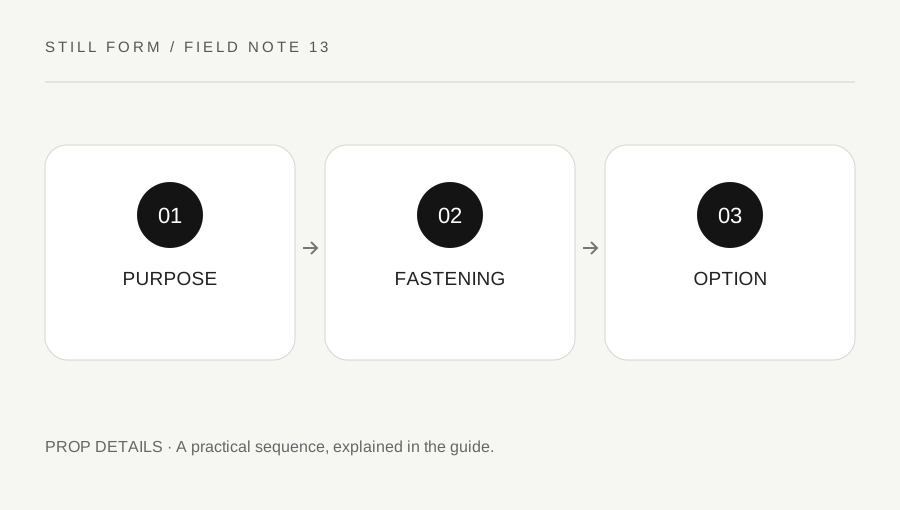
Original explanatory diagram. Examples illustrate a method or decision; they are not claims of personal testing.
Ask what the strap is intended to change
Begin with purpose rather than length. Ask whether the teacher is using the strap to make a connection reachable, to indicate a position or for another clearly explained role. The same object can appear in different lessons with different intentions. A photograph of a taut strap does not establish that you should pull harder.
Record the explanation in plain words. For example, teacher demonstrated a reachable connection is more informative than strap stretch. Do not infer a therapeutic effect from the presence of a prop. A supported-looking image can still contain a position or method that is unsuitable for you, especially without individual instruction.
Identify the actual fastening system
Straps can have different buckles, loops or other construction details. Check the manufacturer’s instructions for the exact item, including correct fastening, inspection and care. A generic diagram from another product may not show your closure. If you cannot identify how the intended fastening works, do not improvise it during a lesson.
Inspect the item for issues described by the manufacturer, including any damage that affects use. Ask the instructor to explain how it is meant to be handled in the specific lesson. Do not attach a strap to furniture, a door or another anchor merely because the product is long enough. Intended use and an appropriate setup are separate from the ability to make a loop.
Worked example: replace a vague length note
Imagine you wrote strap long after watching a demonstration. Before the next lesson, expand the note with actual item, fastening method as instructed, intended contact points and the reason that length was chosen. If you cannot fill those fields accurately, mark the note incomplete rather than choosing an arbitrary length and trying it.
A useful question might be: My strap has a different closure from the demonstration; can you show the correct handling or another option? This focuses the discussion on the actual uncertainty. It does not ask the teacher to approve an arrangement you have already tightened or loaded without understanding it.
Keep tension out of the role of progress score
More tension, a shorter strap or a larger apparent range is not automatically better. Avoid using the equipment as a lever to force a position. Ask how the teacher wants you to recognize the intended use and how to stop or choose another option. Do not wrap or tighten equipment in a way that restricts breathing or circulation.
If a position feels painful, unstable or otherwise unsuitable, do not treat the prop as a reason to continue. Appropriate individual advice takes priority over reproducing the demonstration. A notebook can record that an alternative is needed without framing it as a failure or a temporary obstacle that must be overcome by pulling harder.
Make equipment choices after understanding the lesson
A useful purchasing or borrowing decision starts with an actual equipment requirement. Confirm the relevant dimensions, fastening type and intended use with the instructor, then read the current manufacturer information. There is no need to acquire a collection of different straps to compensate for unclear teaching.
Store the item according to its instructions and keep the closure details with your notes if they are easy to forget. At the next class, confirm that the planned use matches the lesson. The practical goal is a clear, appropriate connection taught in context, with an alternative available when needed. The strap itself does not turn an unfamiliar posture into a suitable independent exercise.
A practical checklist
Choices are saved in this browser. Reset them here or clear this site’s browser storage.
Questions that come up
Should the strap always be taut?
Do not assume so. The appropriate handling depends on the specific instruction, equipment and person. Ask the teacher to explain the intended role.
Can a household belt replace a yoga strap?
Matching length does not establish equivalent construction or intended use. Ask for an appropriate option rather than improvising a loaded substitute.
Does a strap make every posture accessible?
No. A prop may support a particular taught option, but it does not guarantee suitability or replace individual guidance.
References & scope
Background references checked on 18 October 2026. Worked examples and diagrams are original teaching material.